Showing posts with label Alexander McQueen. Show all posts

Thursday, 15 November 2012

heeling power

stilettos give the optical illusion of a longer, slimmer leg, a smaller foot and a greater overall height. they also alter the wearer's posture and gait, flexing the calf muscles and making the bust and buttocks more prominent. 

to die for or will die in?

a stiletto heel is a long, thin, high heel found on some boots and shoes, usually for women. it is named after the stiletto dagger, the phrase being first recorded in the early 1930s. stiletto heels may vary in length from 2.5 centimetres (1 inch) to 25 cm (10 inches) or more if a platform sole is used and are sometimes defined as having a diameter at the ground of less than 1 cm (slightly less than half an inch). stiletto-style heels 5 cm or shorter are called kitten heels. not all high slim heels merit the description stiletto. 

Alexander McQueen

the extremely slender original italian-style stiletto heels of the late 1950s and very early 1960s were no more than 5mm in diameter for much of their length, although the heel sometimes flared out a little at the top-piece (tip). after their demise in the mid-late 1960s, such slender heels were difficult to find until recently due to changes in the way heels were mass-produced. a real stiletto heel has a stem of solid steel or alloy. the more usual method of mass-producing high shoe heels, i.e. moulded plastic with an internal metal tube for reinforcement, does not achieve the true stiletto shape.

Victoria Beckham in Marc Jacobs

Kate Middleton

for some women, high heels are hard to resist. as a matter of fact, heels finish off every female's stylish outfit. it increases self esteem. but appearances aside, wearing high heels on a daily basis can cause serious long-term damage to the body, especially the legs and feet. though women look lovely in heels, they have to suffer form many of its side effects.

disadvantages of wearing high heels:

high-heeled dangers

a) most of the women suffer from foot pain after walking with high heels. because of high heels the entire pressure of body is concentrated on the feet. the entire weight of the body will be directed onto the ball of your foot, this can be especially dangerous for those who are over weight causing the ball of the foot to experience additional pressure.

b) high heels can significantly affect your natural posture and your spine. it has also been found that wearing high heels can put the spine out of its natural alignment and also the spinal nerves can become pinched and pain, tingling and numbness can occur.

c) one can easily get ankle injuries, hammertoe or bunions if not wearing a comfortable shoe, even end up with a twisted ankle if the straps don't fit properly, holding our ankle in the right place.

sigh, the things that one goes through in the name of beauty.

fash'on... BAM!

Monday, 5 November 2012

givenchy

Givenchy store

givenchy is a luxury french brand of clothing, accessories, perfumes and cosmetics with parfums givenchy. the house of givenchy was founded in 1952 by designer hubert de givenchy and is a member of chambre syndicale de la haute couture et du pret-a-porter. 

Hubert de Givenchy

during his reign (1952 - 1995) as the designer of the label bearing his name, hubert de givenchy was known for his modern, ladylike styles, which earned him many loyal clients. the most famous ambassador of the brand was audrey hepburn in films such as sabrina, for which edith head claimed the academy award, how to steal a million and breakfast at tiffany's. his other famous patrons include the guinness, grimaldi and kennedy families, who famously wore givenchy clothes to the funeral of john f. kennedy. hubert de givenchy retired in 1995.

John Galliano with Givenchy

john galliano succeeded givenchy upon his retirement but was in turn promoted to christian dior less than two years later, prompting the hiring of alexander mcqueen. in 2001, designer julien macdonald was appointed artistic director for the women's lines, which consist of haute couture and ready-to-wear. 

Givenchy Spring / Summer 2012

the reins for both collections were ultimately passed on to riccardo tisci in 2005 when he was named chief designer of womenswear. tisci's apparent fascination with gothic touches (dark, languid dresses on sickly-looking models for fall couture) and space-age minimalism (one ready-to-wear show featured white-clad models drifting aimlessly around a sterile-white sphere) have drawn new attention to the brand. reviews and output so far have been mixed and inconsistent, but many, including influential fashion critics (such as cathy horyn of the new york times and suzy menkes of the international herald tribune) have homed in on tisci's conceptual leanings, as well as his future potential for revitalizing the givenchy brand and infusing it with his precision and imagination. 


givenchy designs have been worn by a number of celebrities on red carpet occasions, including gisele bundchen, rooney mara and beyonce. also responsible for working with madonna designing her costumes for her sticky & sweet tour as well as the 2012 super bowl halftime show.


fash'on... BAM!

Friday, 26 October 2012

the goths

YES! it's finally here. the long-awaited post on gothic fashion. before i overwhelm you with images and a full fashion show, it's only fair that we learn of the origins of the gothic movement. 

the goth subculture is a contemporary subculture found in many countries. it began in england during the early 1980s in the gothic rockscene, an offshoot of the post-punk genre. the goth subculture has survived much longer than others of the same era, and has continued to diversify. tts imagery and cultural proclivities indicate influences from the 19th century gothic literature along with horror films and to a lesser extent the bdsm culture.
typical gothic fashion includes a pale complexion with colored black hair, black lips and black clothes. both male and female goths wear darkeyeliner and dark fingernails. styles are often borrowed from the punks, victorians and elizabethans. bdsm imagery and paraphernalia are also common.

in 1977, karl lagerfeld hosted the soirée moratoire noire party, specifying "tragique exigée absolument noire" (totally black tragic dress required). the event included elements associated with leatherman style.

goth fashion has a reciprocal relationship with the fashion world. in the later part of the first decade of the 21st century, designers such as alexander mcqueen, rick owens, gareth pugh, ann demeulemeester, rodarte, hedi slimane, john richmond, john galliano, olivier theyskens and yohji yamamoto brought elements of goth to runways. 
this was described as 'haute goth' by cintra wilson in the new york times. thierry mugler, claude montana, jean-paul gaultier and christian lacroix have also been associated with a gothic style. in Spring 2004, riccardo tisci, jean-paul gaultier, marc jacobs and stefano pilati dressed their models as 'glamorous ghouls dressed in form-fitting suits and coal-tinted cocktail dresses'. swedish designer helena horstedt and jewelry artist hanna hedman also practice a goth aesthetic.


fash'on... BAM!

Wednesday, 24 October 2012

the rebirth


the renaissance period started about 1450 in italy and ended about 1600. the word renaissance came from the Italian word "renascrere" meaning to be re-born. many would say it was the age in which intellectual and creative energy was re-born. in the 15th century fashion was re-born and beauty of the human body was discovered once again. 

Lady Gaga in Alexander McQueen

renaissance dress makers considered the human form in two parts - hips and shoulders. the clothing was made to fit the wearer, yet on the outside it was padded to show the body in a completely different form than the natural one. a person's wealth was shown in the jewels sewn in the cloth, fabric, and layers of clothing. 

Italian Renaissance gowns

toward the later renaissance, fashion began to reflect mannerism. sumptuary laws decreed that commoners only to wear clothing of one color. in order to circumvent the sumptuary laws, men and women cut open the outer surfaces of their clothes to expose the contrasting color beneath, which was called slashing.

during the early renaissance, the necklines varied in cut and height. little changes in necklines, waistlines, sleeves and such help identify the dress to the different time periods and different rulers. with the change of rulers came a change in what was considered fashionable depending on what the queen or king wore.

image from freewebs
women's undergarments were also important in the renaissance when it came to being fashionable and distinguishing status and social class as with other, more visible fashions, such as outer dresses, head dress and footwear. 

the main women's undergarments was the chemise, or as it was also called, camicia or underobe. the role of the chemise was to form the shape of the dress and in the later years was shown at the neckline and sleeves of the dress, and therefore had to be decorated and fashionable. fashions of the renaissance were very complicated and elaborate and undergarments, even though rarely seen, were no exception.

women's hair and head dresses were the most elaborate, ever-changing and time consuming parts of women's fashions in the renaissance. women spent hours plucking hair from their foreheads and side of their face to achieve a high forehead, which was considered fashionable during the Renaissance. They pulled the remaining hair into a tight bun or braid and then covered their heads with some kind of head dress, depending on what was fashionable, which went from to turbans to veils and was always elaborately decorated with jewels, embroidery and rich fabrics. 

in the later renaissance, venetian women would arrange their hair into twin buns that resembled horns at the front of their head. sometimes these horns would be up to half a foot, and with the combined height of hair and shoes, women could appear to be up to a foot and a half taller than they really were. what was considered fashionable for women's hair and head dress changed considerably many times throughout the renaissance. 

Gable or Kennel headdress

close to the turn of the century, women wore what was called the gable or kennel headdress. these were very elaborate head dresses, consisting of many different parts to complete the style. the hair was center parted, and fell loosely down the back, and a white under cap was worn directly over the hair and was tied under the chin. pinned to the under cap was a stiffened tight fitting cap, or coif, with the front and the lappets, or loose flaps, were covered with black material. the front edge of the coif was decorated and rigid with use of metal. pinned to the coif was placed a semi-circular black hood, decorated around the front, that was like a veil, covering the top of the chest and back. women's hair and head dress during the renaissance most likely were as influential in determining status and social class and being fashionable as the outer dress. thus women spent a lot of time doing up their hair and arranging their head dress and most probably took great joy in creating their elaborate styles.

the shoes were very extravagant as was the rest of the outfit. the platform could add height to the wearer and came in a height of up to thirteen inches and jeweled ornaments adorned the leather. although very fashionable, these high shoes were never actually seen in public, as they were covered by the long skirts the women wore. during this period the gracefully curved heel became known as the french or louis XV heel. 

Louis XV heel

the change from platforms to heels changed the whole idea of shoemaking. walking became considered an art with wearing heeled shoes and a hoop skirt moving forward and backward. hemlines were hiked up to the ankles and thus the costly foot attire was shown off to the public. 


the renaissance period caused fashion to change forever. it was a period that set the stage for years to come. elaborate details, along with colorful fabrics and expensive jewels were just a few elements of the renaissance fashion. people went to any length to outdo each other in their garments. as the period went on the decorative details got more and more elaborate leading up to the elizabethan age. the italian renaissance influenced all the countries around them. many countries copied the renaissance "look", because of the elegance and beauty of the clothing. the fashions of the italian renaissance were so influential that, when italy was conquered by spain, france, and austria, the fashions in europe changed and were never the same. the fashions of the renaissance period were truly in a league of their own.

fash'on... BAM!

Monday, 15 October 2012

hello-outfit

as adults, we celebrate singapore's halloween in a couple of ways... either we turn up at a club or event, dressed up in costume and party the night away. or we buy tickets to some local attraction and get spooked out by part-time (sometimes, full-time) actors or talents. both ways, it is pure fun and a great opportunity to take pictures.

so keeping both the elements of fun and photos in mind, for the last two halloweens, i went for the non-dress up option. primary reason? this is what i do for a living...

another day in the office

the idea of dressing up as a character and putting on make-up really does not appeal to a performer during his down time. being the practical money-grabbing person that i am, unless i'm paid, chances are i won't don a costume out of my own accord. 

i remember being invited to a 'skin' party where you were supposed to go in revealing outfits showing off some skin. i turned up, covered head to toe in cow skin (leather). the host was not too pleased but hey, i did technically dress to theme. so excuse me for my blunt ways but if i am here to party, i need to be comfortable and comfortable was i when i showed up at last thursday's halloween event for the media (shall not do any plugging for them today since all posts tomorrow will be devoted to them)

couple of notes when planning your outfit:

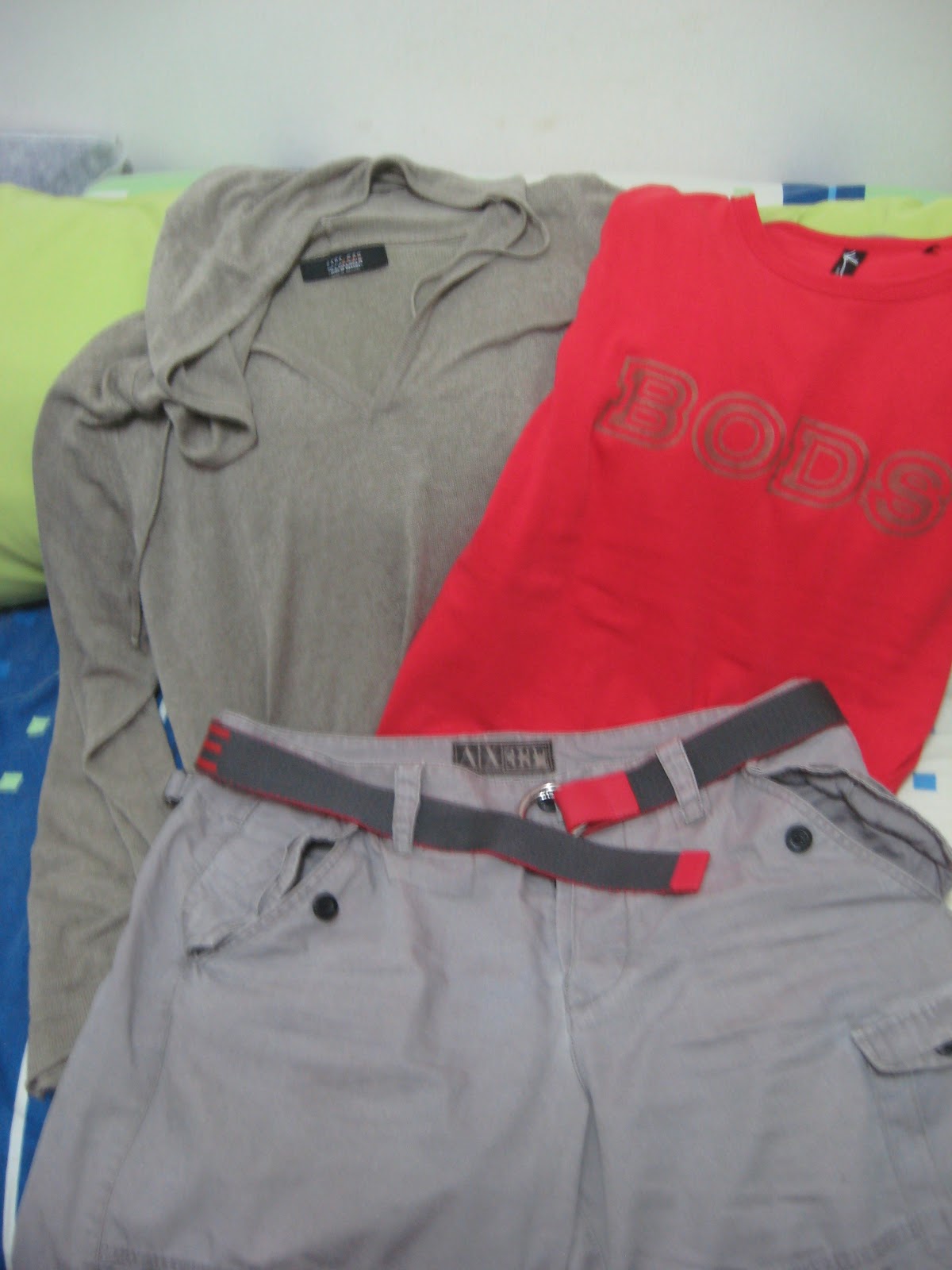
1) know where you are going... if it's a fully air-conditioned venue, then you can dress in a few more layers and don fabrics that do not 'breathe'. if it's an open air event, then you might want to scale back on the layers. personally, i went for a pair of bermudas because walking around in jeans is way too warm for me. however i did layer my top and i'll explain why in the next point.

as for shoes, i went for one of my favourites, puma (think this was alexander mcqueen collection), because if there was one thing to expect, it was walking.


the shoes

2) know what you are going to do there... if your intention is just to view attractions, then it's fine to wear anything. after it's halloween, no one will fault you for looking hideous. however, if you are going to be taking lots of photos OR people are going to take photos of you, then please do yourself a favour and wear something decent. 


the outfit

i wore a basic red tee layered it with a hoodie. the red was just for that pop of colour and the tee that i selected was one that is highly absorbent so i won't feel sticky even after perspiring buckets. the hoodie was to cover the sweat patches that will probably appear on the red tee. also, with the hood, you can have more outfit options! slip the hood over your head and you can mimick the traditional black hooded death.

overall verdict? i did perspire a lot throughout the evening from the weather and all the walking around but i'm pretty happy that the outfit i selected did not disappoint in photos while keeping me comfortable the entire night. while you prepare for your halloween night out, do take a couple of moments to plan your outfits for a great evening of fun and a fantastic album of great memories.

fash'on... BAM!