Showing posts with label men's fashion. Show all posts

Wednesday, 12 December 2012

vintage men

i know, most of you will be blasting me for how little coverage i am giving when it comes to vintage styles for men. well, don't blame me. i wish that i was a trendsetter back then too but in the past, men's fashion was a tad bland hence the less attention given.
however, once you understand that fashion is a never-ending cycle that always takes on a modern-day twist, the possibilities for style become endless. vintage clothing has always been a popular phenomenon, but knowing where to find it, how to wear it and which era is 'in' is the ultimate challenge.

from the '50s to the '80s (and soon the '90s), everything from saddle shoes and spandex to big collars and big hair eventually sees a reemergence on the fashion scene. every era has a comeback, as today's designers simply update the styles from other time periods. so basically, it's the concepts from different decades that return, rather than the actual article of clothing. 

here are some items that one can include in their closet to achieve that retro-look!

1) dirty denim 
otherwise known as 'washed-out' or 'distressed', this denim is treated to give jeans and jean jackets a second-hand look.

2) button-down shirts 
popular vintage-looking collared shirts include 'utility' shirts; a button-down with a small chest pocket on one side and a patch or insignia that reads 'joe's gas station', for instance. you can also find shirts, in either brown, blue or green, with some stripes on the shirt, usually in another shade of the shirt's base color. another popular vintage detail is a shirt collar made from a different fabric, usually a knit.

3) converse and nike

the '80s have returned in full force, especially in the world of sports apparel. you can find old-school white nikes with the original nike 'swoosh' in most sporting goods stores. even '80-style converse all-stars (low or high-top) have made a huge comeback.

4) sunglasses


oversized shades are super popular for men and they're reminiscent of the good old '60s and '70s. even '80s-style aviators are flying high on the fashion scale.

fash'on... BAM!

Friday, 30 November 2012

men and bags

bags have become a necessary tool and style accessory. no longer seen as solely a woman’s item, men’s bags are masculine, attractive and ideal additions to any contemporary wardrobe. if you would like to dabble in the wide world of men’s bags but don’t quite know which one would suit your needs best, stick with a classic type of men's bag and you can’t go wrong.


the following are five types of men's bags that can be easily mixed and matched with your business and casual wardrobes. 

1) briefcase

image from philsadvice

briefcases are probably the oldest form of 'acceptable' handbags for men. modern-day briefcases, however, have evolved a great deal since the days of the sharp-cornered case. they’re no longer boxy; in fact, that’s about the only traditional element discarded in the modern briefcase. the classic shape (without the sharp corners), buckles, leather exterior and practical interior compartments help make this bag a timeless addition to any working-man’s wardrobe.

2) messenger bag

picture from balsum

aptly named, the messenger bag is designed after the bags traditionally carried throughout history by - whom else? - messengers. often made from canvas and swung across the shoulder, messenger bags have taken on a whole new meaning in urban fashion. from students with canvas bags to urban hipsters with modern leather bags, the messenger’s laid-back style will always have a classic casual flair but today’s leather messenger tote also exudes a hint of uptown sophistication.

3) holdall


any traveling man needs a holdall for those weekend jaunts or three-day business trips. big, bulky luggage has transformed into sleek, stylish holdalls (or carryalls). its design is inspired by the duffel bag but its predominantly leather exterior and more refined appearance attribute a classic look to this practical tote.

4) tote

Tote from Gucci

a tote is the modern approach to the classic briefcase. resembling an artisan’s bag, the tote is the utmost in casual business attire. its basic design and usual soft leather exterior allots it a classic status while its long handles give it a contemporary edge. if purchased in a chocolate brown or black, this bag can add a touch of laid-back masculinity to any casual work wear.

5) newsboy bag

Newsboy Bag

like the advent of the newsboy cap, the newsboy bag is a classic style that has become synonymous with men’s casual wear. it’s similar to the messenger bag’s style but its traditional canvas exterior makes it a little less formal than the latter. this bag style is perfect for the student on the go, as it makes a fashion statement and exudes more masculinity and style savvy than a knapsack.

are you bag-ging for more? do visit askmen.com.

Pharrell Williams & Kayne West

fash'on... BAM!

Thursday, 29 November 2012

men and leather

gone are the days where the majority of men don leather jackets and pull back their hair then ride off into the sun. these days, the use of leather is common yet less conspicuous. owning an item made of natural leather is like being in a sartorial relationship. leather, unlike many other materials, takes on a personality of its own depending on how you clean, treat, or wear it. as if it were a blank canvas, leather takes on scuffs and develops a unique patina over time, adding to the appearance and texture of it. ultimately it’s up to the individual regarding how their leather looks and here are a few key tips to ensure your pieces look their best for as long as you own them.


general cleaning: cleaning your leather is essential, since not only does it remove surface dirt and stains before they become permanent features, it allows for further treatments to be fully absorbed and take effect. the most basic way to clean your leather is to take a clean, lint-free cloth and dip it in some warm water with a mild detergent. if you have a more prominent stain, try using mink oil in lieu of detergent. always work the cloth in small circles and make sure to go over the entire garment, allowing it to dry fully before any further action is taken.

natural leathers: natural leather, often called ‘vegetable-tanned’ leather, is untreated when it makes its way to you. for the unfamiliar, this adds the risk of permanently staining the garment but to those in the know, it provides the opportunity to get the desired tone and patina from their piece. the easiest way to ‘tan’ a natural, unsealed leather is to place it in the sun for a day or two. make sure to rotate the piece so that all parts of it are exposed to sunlight. this will give the leather a nice, warm glow to it that can later be ‘sealed’ in and preserved. if a more mellow coloring is desired, simply treat the jacket and then wear it as you would normally; the color change will be less perceptible, but develop over time.

treating: this is the real maintenance aspect required with your leather, since as a natural material leather will dry out over time. often people attribute cracked, ruined leather simple as a product of its age but more often than naught, it’s simply a matter of improper care. properly treated leather will literally last a lifetime.
as a general rule of thumb, leather should be treated roughly every six months or so. if you live in a climate where winter prevents your wearing the garment, treat it before you put it away for the season; non-use is not an excuse for non-treatment.

the following products are time-tested methods for bringing the best out of your leather:

neatsfoot oil - used most often on saddles and baseball gloves, neatsfoot oil is produced from the hoofs of cattle. it produces a soft-yellow tone that over time will darken with age. as with all the oils listed here, make sure the product is 100% pure, since synthetic substitutes provide little to no benefit.

mink oil - found in cream or liquid forms, this oil is the most commonly used to treat leather. it moisturizes and provides what many call a ‘reddish’ coloring. it can also be found mixed with waxes for use on items where waterproofing is desired.

leather dressings - these are the products that should be used after oiling, to ensure that moisture is sealed into the garment, and dirt is kept out. this will give your leather that look of being properly maintained.

leather care is one of the small pleasures of owning a quality item, and it will ensure that a piece is enjoyed for many years. if you would like a more specific post on leather care pertaining to shoes, you can just click here for my earlier post i did on shoe care.

fash'on... BAM!

men and colour

this post is going to ruffle some feathers. take a look at your closets and list the colours. if you have only blacks, blues and greens, you need serious help (from The Online Editor maybe?). nah, i'm just kidding.

image from geek in heels

as you might guess, pink isn't a favorite of most men. blue, green, and black are generally the colours that men do like most. however, the colours men like for themselves and the colours they find attractive on women aren't necessarily the same. colours that are traditionally considered masculine colours or that appeal most strongly to or are more closely associated with men can be good choices for marketing messages, websites and interior designs targeting men. colour studies done over the years indicate that the favorite colours of men and women do differ. some of these differences in favorite colours may be attributed to cultural use of color and conditioning.

there are no hard and fast rules about what colours are masculine or feminine or gender-neutral. because colours come in many tints and shades, someone may love a rich, royal blue but strongly dislike a pale, sky blue so a preference for the colour blue doesn't mean that every shade of blue is universally appropriate. however, some generalizations are possible based on various colour studies.


men like the colour blue: blue is a favorite colour of both men and women of all ages. however, men have a much stronger preference for blue than women. it may be the calming effect of the color blue that makes it a popular colour for both men and women or it could be the association of some shades of blue with authority figures, intelligence, and stability. it's possible that men tend toward blue because they've noticed that women find men in blue attractive whether it's a blue uniform or a blue business suit. 'women... like their men to wear blue. they associate blue with reliability and dependability... women often desire to find a man who is going to be faithful and honest. the coloir blue reflects these qualities subconsciously.' — secrets of attraction two: colour


men like the colour green: a distant second to blue as a favorite colour of men, the colour green is cool, restful and signifies growth, renewal, health, and environment as well as balance and stability. while women favor cool, soft colours, men prefer brighter shades although they still show a preference for cool colours such as blue and green.
men like the colour black: men favour the colour black only slightly more than women. a strong preference for conservative colours such as blue and black may also reflect social and cultural norms where women wear the brighter, more varied colors while men's attire is traditionally less colourful.
colours men don't like: purple stands out as a feminine colour because it is chosen almost exclusively by women as a favorite colour and is strongly disliked by men. men are less likely to respond favourably to other feminine favourites such as lavender and turquoise. most people still think of pink as a feminine, delicate colour, the colour for little girls. even though it is acceptable as a clothing colour for men, the colour pink has such strong negative associations for men that some uses of the colour may be considered insulting to men.


here's a little challenge that i would like to issue to every male reader: experiment with colours. go beyond blue, green and black. test out purple and pink!

fash'on... BAM!

Wednesday, 28 November 2012

men and pants

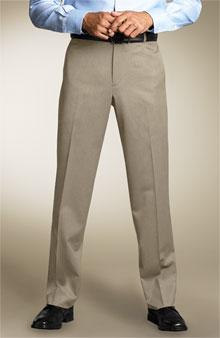
in preparing this post, there were a list of lame jokes and titles that i came up with. of course, all of them did not meet the final cut (geddit, geddit? final cut!). so some of those titles include 'start panting', 'pant-demonium' and 'penning about pants'. anyway, pants are another article of clothing common to men. a pant in general is a piece of clothing used to cover legs. pants can be made of any material but mostly they are made of cotton, nylon, denim, wool, spandex or polyester.
today there is a great variety of different types of pants for men. for men pants are the most important article of clothing as unlike women who can wear dresses and skirts, men only have the option of wearing pants with shirts. still, men’s pants are simpler and fewer in types then women. here are some types of pants used by men:

1) trousers

trousers are straight pants made of cotton, linen, polyester, wool or nylon. usually trousers are made for formal purposes and are worn below dress shirts. trousers have their pockets stitched inwards and can vary with the width of the legs. trousers are widely classified into two categories: pleated and flat front. 
pleated trousers: these pants are one of the classiest type of pants. these pants have pleats in front and are highly sophisticated, elegant and trendy. pleated trousers can be worn on any occasion whether it’s a dinner, a wedding or a job interview. the best thing about pleated pants is that they have never gone out of fashion. These simple pants go along any dress shirt.


flat front trousers: as the name suggests, flat front trousers are flat from the front. these pants were very popular once, particularly in the 1970s. these pants are made for those who have a slimmer body shape. shirts are usually tucked under the pants when wearing these pants. while buying a flat front pant one must be sure that it fits him perfectly.

2) jeans and denims

jeans and denim

jeans and denims are, by far, the most popular types of pants for men. these are casual pants worn under polo shirts and t-shirts. there is a large variety of jeans and denims available in markets. apart from formal occasions jeans can be worn anywhere, in fact jeans has become dress code for informal occasions.


3) cargo pants


cargo pants are the most comfortable of all the types of pants. these pants are loose and baggy boasting an extremely comfortable and cool look. they are perfect for outdoor activities such as trekking and hiking. cargo pants are made of a hardwearing fabric which is stitched via hard stitching allowing free movements. mostly cargo pants are worn with polo shirts and t-shirts.

hope you are not panting over your pants!

fash'on... BAM!

men and ties

(from left) Prince William, David Beckham & Prince Harry

when it comes to ties, there is a full range of information available online. for instance, if you are looking for the history of ties, you can hop over to wikipedia. if you have a little more time to spare, do read this article from gq too. it's almost a course of everything one should know about the art of ties. for the rest of us, this is just a quick post to four ways of knotting a tie.

1) the four-in-hand knot


the four-in-hand knot is also known as a simple knot or schoolboy knot, the four-in-hand is believed to be the most popular method of tying ties due to its simplicity and style. some reports state that carriage drivers tied their reins with a four-in-hand knot, while others claim that the carriage drivers wore their scarves in the manner of a four-in-hand, but the most likely etymology is that members of the four-in-hand club in london began to wear the neckwear, making it fashionable. the knot produced by this method is on the narrow side, slightly asymmetric and appropriate for most, but not all occasions.


the four-in-hand knot is tied by placing the tie around the neck and crossing the broad end of the tie in front of the narrow end. the broad end is folded behind the narrow end and brought forward on the opposite side, passed across the front horizontally, folded behind the narrow end again, brought over the top of the knot from behind, tucked behind the horizontal pass, and the knot pulled snug. the knot is slid up the narrow end of the tie until snug against the collar. 

2) the windsor knot


the windsor knot, also referred to as a full windsor or as a double windsor to distinguish it from the half-windsor, is a method of tying a necktie. the windsor knot, compared to other methods, produces a wide symmetrical triangular knot. the knot is often thought to be named after the duke of windsor (king edward viii after his abdication). it was, however, likely invented by his father george v. the windsor knot is especially suited for a spread or cutaway collar that can properly accommodate a larger knot. for correct wear the tie used for a windsor knot should be about 4 centimetres or 1.6 inches longer than a conventional tie. 


to tie the windsor, place the tie around your neck and cross the broad end of the tie in front of the narrow end. then fold the broad end behind the narrow end and push it up through the inside of the loop around your neck. the left and right sides of the narrow end and the inside of the loop, now form a triangle. the third and fourth folds should complete one rotation around the outside of the knot. the fifth fold brings the broad end over the top of the knot from the front to the back. the sixth and seventh folds again complete one rotation around the knot. the eighth fold should again bring the broad end up over the top of the knot from behind; push the end down through the loop in front of the knot that you made with the seventh fold, work out any wrinkles, and pull the knot tight. if the tie is unbalanced, untie the knot and try again giving yourself more or less length to work with.

3) the half-windsor knot


the half-windsor knot, also known as the single windsor knot, is a way of tying a necktie which produces a neat, triangular knot. it is larger than the four-in-hand knot and pratt knot, but smaller than the windsor knot. the half-windsor is derived from the windsor in that it is only brought up around the loop on one side rather than both. it works well with light and medium-weight fabrics.


to tie the half-windsor, start with the wide end of the tie on your right and extending a foot before the narrow end. cross wide end over narrow and turn back underneath. bring it up and turn it down through the loop. pass the wide in from the front, from the left and to the right. then, end up through the loop, and put it down through the knot in the front. tighten the knot carefully and draw it up to the collar.

4) the pratt knot


the pratt knot is a method of tying a tie around one's neck and collar. it is also known as the shelby knot and the pratt-shelby. the knot was invented by jerry pratt, an employee of the us chamber of commerce. he had been wearing his tie in the pratt knot for some twenty years before it became popular after tv personality don shelby wore it on air. the new york fashion press then promptly attributed the invention of the knot to shelby.


the pratt knot is unusual in that its starting position is 'reverse side out'. it uses less length than the half-windsor or windsor knots and so is well suited to shorter ties or taller men. unlike the four-in-hand knot, the pratt method produces a symmetrical knot. it is of medium thickness. in Italy, it is simply referred to as the 'nodo alla milanese' (milan style knot).

fash'on... BAM!

men and shirts

so yesterday, The Online Edition took a closer look at men's intimates and today, we shall move to the regular fashion of men. i must, however, put in a disclaimer though. while i like to cover in details all the types of clothes available for men, i won't because (a) it'll take too long a post to do an extensive cover (b) it'll take too long a period of time to devote short, individual posts to each article of clothing (c) it'll just take too long to get it all done. so anyway, let's cut the yakking and go straight into the garment of the moment: shirts!

George Clooney

a shirt is a cloth garment for the upper body. originally an undergarment worn exclusively by men, it has become, in american english, a catch-all term for almost any garment other than outerwear such as sweaters, coats, jackets, or undergarments such as bras, vests or base layers. in british english, a shirt is more specifically a garment with a collar, sleeves with cuffs and a full vertical opening with buttons or snaps. (north americans would call that a 'dress shirt', a specific type of 'collared shirt'). a shirt can also be worn with a necktie under the shirt collar.

commonly there are three types of cuts or fits:

1) athletic fit: aggressively fitted dress shirt

Athletic fit or slim fit

athletic fit dress shirts have been popular for some time, typically marketed as 'slim-fit' shirts for men who were looking for aggressively tapered dress shirts for wear to a bar or nightclub, or simply as a more professional alternative to the classic cut for men with slimmer or smaller builds.

the benefit of an athletic fit dress shirt is an appeal to modern sensibilities, a cosmopolitan, urban edge that will most certainly factor into the final look of your ensemble.

2) modern fit: a moderate taper, semi-fitted dress shirt


modern fit is a relatively new entrant in the menswear circuit, although shirts that would commonly now be described as 'modern fit' have existed in some incarnation or another for decades, simple alternatives to the more traditional, accommodating classic fit. modern fit describes a moderately tapered dress shirt, otherwise known as a semi-fitted shirt. This particular cut looks great on men of average build as well as leaning either way from that starting point – the somewhat slim and the somewhat heavy.

the wonderful thing about the modern fit dress shirt is that it is the best fit in most circumstances for a large cross-section of the population. men of large build can normally fit into a modern fit dress shirt and this type of shirt will look better than the classic fit equivalent on slim men as well. the modern fit dress shirt also looks very appropriate for office wear or formal occasions as well as for outings to the club or restaurant for fine dining and romance – making it an excellent candidate for purchase.

3) classic fit: roomier, more accommodating 

the classic fit dress shirt is, by and large, the most common cut available to men from most department store outlets. with little to no taper, the classic fit dress shirt is roomier and much more accommodating for men with larger builds, allowing for greater freedom of movement and comfort.

the classic fit dress shirt is slowly fading from popularity with the introduction of the modern fit into the marketplace. the classic fit remains an excellent choice for big and tall gentlemen, as well as men who prefer a more formal look.

finally, how to figure the size of your dress shirt:


if you want further reading, go here for details about collars and here for shirt tips.

fash'on... BAM!

Tuesday, 27 November 2012

let's take stock of socks!

besides underwear, another piece of garment that is strangely intimate to the body are socks and interestingly, not many people like talking about socks. yet on google, a search on male underwear gives you 22.5 million results but type in socks and you'll garner 43.5 million results. this only means that we are writing a lot on socks and not talking about it enough in our daily conversations.


socks are an interesting piece of clothing; we pay so little attention to them and yet they’re central to our overall comfort in several ways: socks protect our feet from abrasion, wick away our perspiration, and keep our dew beaters snug in our shoes. they’re also a small detail that can either pull your outfit together or serve as an unwelcome distraction.

first, the rules:

1) your socks should match one another and not have holes or visible stains

now some of you are thinking this is incredibly obvious; however, for most of us, failing to heed this rule is going to lead to an embarrassing situation when we unexpectedly have to remove our shoes; instead of striking up a conversation with a potential business partner, we’ll be worried about concealing our protruding big toe.

2) your socks should match your trousers

a man cannot go wrong following this advice, as it serves to create a streamlined look with no unnecessary color contrast until the eyes meet the shoes. many men also like this rule as its rigidness leaves no room for interpretation and confusion.

however once a man has a sense of his own personal style, he should feel free to break this rule. doing so enables him to introduce into his wardrobe a wide range of patterned and perhaps even lively colored socks that conservative dressers would avoid.


3) wear knee length vs. ankle length socks

this rule is based off the belief that a gentleman should not expose his bare leg unintentionally. a bit archaic but it still holds sway nonetheless as the flash of fair hairy skin when wearing a dark suit can be distracting. 

in practice, this rule is hard to abide by as most sock manufacturers do not make socks that rise anywhere close to the knee. the extra material increases the cost of the sock by 25% or more, and most manufacturers are competing on price. 

4) your socks should match the dress level of the rest of your ensemble

if you’re wearing black-tie, then choose a quality, lightweight, knee-high sock with a sheen appearance. if you’re wearing a sport jacket and grey flannel trousers, heavy wool argyle socks work perfectly. jeans, a nice t-shirt, and leather casual footwear call for a dark sock that simply pulls the shoes and denim together. trip to the gym? here’s where you wear those white tube socks.

next, the selection of material: 


wool – the earliest yarns used in sock production were spun from wool. today wool socks are hard to find in most box stores and their price makes them a luxury for those accustomed to paying a dollar a pair. often blended with synthetic fibers to increase desirable properties such as strength and abrasion resistance, wool socks are great for hikers as they absorb moisture from the skin and release it outside the sock. in addition, wool has unmatched insulating properties and keeps feet warm in cold weather and cool in hot temperatures.

cotton – the most common sock material, cotton fiber is inexpensive and durable. when blended with lycra or other man-made fibers it can hold its shape and conform to the foot providing an excellent fit. cotton socks can be washed roughly with any type of detergent, and although its absorption and insulation properties aren’t on par with wool, its ease in maintenance and overall acceptable performance make it the choice for most.

cashmere and silk – a luxury blend suited for dress socks, a blend such as this looks at home when paired with quality dress shoes and a fine worsted wool suit. lighter than wool, they provide similar benefits with less bulk.


other fibers that are commonly blended with the above include nylon, acrylic, olefins, spandex, linen, bamboo, cashmere and mohair. the purpose of these blends is to achieve desired properties in feel, performance, durability and elasticity.

finally, the types:

athletic performance socks – athletic socks are worn to enhance a man’s physical performance. from the simple sport cotton tube sock to low-cut running socks with strong sweat wicking properties to specialty designed skiing socks meant to wick moisture and trap in heat, these socks at the least increase comfort and can in an extreme case help a snow sport enthusiast avoid frostbite.

dress socks – meant to be worn with a man’s suit or casual clothing, they come in a wide range of materials and for the most part stick to darker colors such as black, charcoal grey, medium grey, bottle green, brown, and burgundy. lighter shades such as tan work well with lighter clothing. as for patterns, the most traditional one is the classic argyle. more modern 'attention grabbing' colors and shades have been becoming more popular and are available from online men’s specialty stores.

protective socks – as bulk is not a concern here, protective socks utilize heavier weaves and higher concentrations of insulating fibers. although this may compromise on fit, performance when it comes to extremity protection is maximized. socks of this type range from wet suit footwear meant to keep the feet warm despite being wet to polartec powerstretch fleece socks meant to worn in extreme cold conditions for a solid week straight when hunting.


finally, socks aren’t the first item in our wardrobe we give thought to. however, they are an important part of a man’s clothing. understand your needs, work within your budget and be prepared for whatever life throws at your feet.

fash'on... BAM!